Digital Detox: How to Control Consumption in a Constantly Connected World

At the intersection of our attention and our connective devices, a treacherous path lies ahead. Throughout our country, the intersections are real, and with deadly consequences; our addiction to screens is claiming lives at an alarming rate. Pedestrians stare at their phones as they carelessly cross intersections. Simultaneously, drivers face even more dangerous distractions, often juggling phones along with the car’s built-in displays and interfaces. It only takes one of these individuals to cause a life-altering or life-taking accident. These tragic events are all too common and can be avoided.
Unfortunately, the pull of our devices and urge to constantly be connected are increasing at an alarming rate. According to recent data, American drivers are now more engrossed in their phones than ever before, with phone motion and screen interaction while driving skyrocketing by 20 percent between 2020 and 2022 (The State of Distracted Driving in 2023 & the Future of Road Safety, 2023). Disturbingly, this surge in distracted driving coincides with a staggering increase in pedestrian fatalities, reaching levels unseen in four decades. With each passing year, the toll of this epidemic mounts, leaving shattered families and communities in its wake.
While the streets remain a perilous battleground, it shows how our increasing addiction to phones and other devices is not merely a matter of personal inconvenience—it is a matter of life and death. Distracted pedestrians and drivers are but one example of a much broader trend, our society’s growing dependence on technology. We are amid a profound societal challenge: the pervasive allure of our devices, driving an ever-increasing dependence, resulting in a myriad of issues that we are scrambling to study. There is an urgent need to understand and confront the root problems causing these issues.
News stories of mass shootings and youth suicides are becoming ever more common in the past few years that they garner less attention, the news cycle overburdened by the rate of news all clamoring for our attention spans, working hand in hand to keep us scrolling. Half of U.S. teens have been bullied or harassed online (Vogels, 2022), and the suicide rate has tripled from 2007 through 2018, while the homicide rate doubled from 2016 through 2021 for people aged 10–14 (Curtin & Garnett, 2023).
Yet, despite the grim statistics and heart-wrenching stories, the allure of our screens remains unyielding, beckoning us to trade our attention for the fleeting comfort of digital distraction, a quick hit of dopamine. As we grapple with this modern-day crisis, we might be quick to point the blame at the tech companies and the addictive engineering or our government for their inability to understand the tech and therefore regulate it effectively. While the solution may lie in policy reform and technological innovation, what can be done now, on an individual level, to better our current situation? To understand how screen time can affect us, we can start by examining the individual experiences of others.
Andrea, a consultant at the Oregon State University online writing center, exudes a relaxed yet professional demeanor, bringing a personal warmth to the otherwise nondescript environment of her office over Zoom. Despite being a Finance major, she wanted to study and write about the effects of increased screen time on early childhood social development, her interest in pursuing this stemming from her own experiences and those of her family. Andrea grew up during the smartphone boom and later witnessed another large shift to online activity during the pandemic. She also has observed the many effects of increased screen time and social media activity on her family dynamics. While her older sister was allowed more freedom and time with personal connective devices, her mother quickly saw how they were diminishing in-person social activity both in and out of the home, and she began to limit Andrea’s use of such devices. Despite initial feelings of alienation due to limited device access, she now appreciates the benefits of her mother’s intuition, increased social skills, gained from real-world interactions.
When her sister later had a child of her own, Andrea was intrigued by observations of her nephew. Like many of his generation with access to screens and apps, drawn to technology at an incredibly early age. Focusing her study on early childhood development for her academic paper, she explored studies on the effects of screen time on social skills, confirming what she had already observed casually, that virtual interactions can hinder children’s social abilities, as well as lead to issues such as overstimulation and attention problems. Additionally, prolonged screen time correlates with higher rates of anxiety and depression in young children, continuing into adolescence as exposure to unrealistic content increases, shaping their worldview in potentially disadvantageous ways.
Screen time for children under two has become a pervasive aspect of modern childhood, but its implications for cognitive development are increasingly concerning. A recent birth cohort study sheds light on the long-term effects of screen exposure on neural activity and cognitive outcomes. With a cohort of 437 children, the study found that screen time at twelve months old correlated with altered electrocortical activity in the frontocentral and parietal brain regions, as measured by EEG, which, in turn, mediated the association between infant screen use and executive function impairments later in childhood. These findings show the potential risks of early screen exposure on neurological development. Pointing to the need for screen time guidelines and interventions to support healthy development in the minds of young children (Law et al., 2023).

Andrea knows the many challenges of limiting screen time. It can be difficult to reduce the adverse effects of too much screen time when factoring in social pressures, the fear of missing out, and the addictive mechanisms built into these apps.
Having and using personal connective devices is not all bad, however, they can be effective tools for social communication and mobilization. Though when media users are primarily focused on entertainment, evidence suggests that this media use will not stimulate various forms of civic engagement, and most utilize the internet primarily as a source of entertainment. Experiments that compare face-to-face and computer-mediated communication confirm that the richer the medium of communication, the more sociable, personal, trusting, and friendly the encounter, and there is no richer medium than in-person and face-to-face interactions. Since it has been more common for audiences to consume media content via social media channels, creating engagement has become crucial for the business model of media organizations (Kim, 2024).
These companies conceive systems to keep you engaged for as long as possible. Increased use of social media has also led to more than half of young people developing a social media addiction (Käcko et al., 2024). According to professor of computer science and statistics, Edward Tufte, “There are only two sectors that call their customers ‘users’, the illegal drug industry and the software industry” (KAHYA ÖZYIRMIDOKUZ & STOICA, 2023).
Nick DeMayo, an individual therapist running his own private practice in Portland, offers another set of valuable insights into navigating the complexities of growing up in the digital age. Through his many years of working with adolescent boys, video game addiction has been a common issue for many of his clients, especially those boys from 5th grade through the ages of 10-15, when kids are shifting into middle school and parents are beginning to have less control. Adolescent boys spend increased time online, sometimes pulling all-nighters, often with friends they only know online and located halfway around the world. This creates even more pressure to stay online at all hours, at the expense of sleep, and impacting their home and school lives.

In another example of addictive media engineering, the largest companies in charge of creating the most popular games hire psychologists and researchers to maximize stimulation, even going as far as monitoring heart rates and neural activity of test players. Little else can compete with the stimulation of these games, the stories, reward systems, constantly adding content to keep players coming back day after day. DeMayo recalls an apt analogy from a workshop on tech addiction comparing video games and social media to slot machines:
“It is the randomness that keeps the person engaged, they never know when they will get a reward, another hit of dopamine. Screens can create an addiction to intermittent rewards, we are not necessarily addicted to the screens, we are addicted to getting the intermittent rewards, and these intermittent rewards are what keep people playing slot machines for hours and hours.”
– Presenter (workshop on tech addiction)
The result of such addictive media is that they do not want to do anything else, they start to say no to homework, to any hobbies they had before, school performance suffers, and personal connections diminish. “I have had parents tell me ‘Oh you know my kid he’s staying home from school these two days a week’”. DeMayo likes to focus on increasing their self-awareness, self-esteem, and self-control, and he sees the years before high school as a critical time for parents to instill more responsible screen time habits. “These middle school years are really [formative], it is your window of opportunity, and you could collaborate with them. You can ask them questions like: what is a healthy amount of screen time?”
While it would be ideal to start these conversations at the first signs of a problem, more often it is already an issue and requires a more involved approach. Increased screen time is such a widespread problem that whole sectors of tech are capitalizing on fighting this addiction. More technology may seem like the obvious answer for those entrenched in digital lives, but it could also be just another opportunity to increase revenue while we relinquish our responsibility.
In the ever-evolving landscape of digital wellness, a myriad of tech solutions has emerged to help individuals reclaim control over their screen time habits. Screen-time apps, such as RescueTime, Opal, and Forest, offer users the ability to track and manage their device usage by providing insights into their daily habits and setting limits on app usage. For those seeking a more drastic approach, many have taken to swapping their smartphones with “dumb phones” or minimalist devices, like the Light Phone, which offers a stripped-down alternative to traditional smartphones, focusing solely on essential functions like calls and texts to minimize distractions.
To evaluate the effectiveness of tech solutions in the fight to reduce screen time, we can look to DeMayo to offer some evidence. Screen time apps such as the one on the iPhone, are not always being checked. He is impressed when a parent has incorporated them or other controls into their strategy, though he also likes to remind them that they bought the phones for their kids, and they can take them away. The same goes for other devices and platforms such as Steam and Xbox. “It’s their credit card that is on file, and they assume the responsibility in that sense.” There are also cases where alternatives to smartphones can be employed to beneficial effect. “I’ve seen something really cool with some of my sixth graders where their parents will get them an Apple watch before getting them an iPhone, which I think is a good kind of step. I think that’s pretty cool, and then they always end up getting an iPhone around seventh or eighth grade. I do think some controls would be great even through freshman year, to give them a year to kind of show that they can use their phone responsibly.” This advice can result in some pushback from parents claiming a phone is needed as a ‘safety issue,’ that’s when DeMayo will recommend dumb phones. “I’ve had clients who are on their smartphones during every class, they are totally checked out. I’ll suggest to parents that they get them a “dumb” phone for school, that can only make calls and text. Some parents have tried this, and it’s really helped.”

If dumb phones can be effective, there is another new class of personal connective devices that has the potential to be even more enticing as an alternative to smartphones, one driven by AI (Artificial Intelligence). At this year’s Consumer Electronics Show, held on January 9, 2024, the techies were buzzing about a new device riding this wave of AI innovation. It is called the Rabbit R1, a sleek digital companion designed in collaboration with the design firm Teenage Engineering, about half the size of an iPhone that could promote healthy screen habits by harnessing the power of artificial intelligence to interact with apps using our voice instead of using a touchscreen, freeing them from visual distraction.
The idea is novel and gaining considerable attention, with the product selling out before any units have even shipped, but we will have to wait to see what the results are, if this is a fad for a small subset of users, or if excitement can be translated to a more general audience. Whether through mindful tracking, simplified interfaces, or intelligent assistance, these tech solutions offer diverse paths toward achieving a healthier balance between screen time and real-world experiences.
Shiny new objects and clever marketing can certainly grab your attention, but what about a completely opposite approach, one that removes technology completely. That is precisely what Stacey Mckinna – a life coach specializing in digital detoxes and nature retreats – has done; Living her life without a smartphone for the past 11 years. She describes the benefits she has seen through this practice: “It has given me peace, a strong memory, reliable intuition, and an ability to focus and search within myself for answers.”
Such drastic measures may seem impossible for the vast majority, but her commitment is a powerful example of the positive effects that such a lifestyle provides. It is all about observing yourself and finding a balance, “One way to know if you are out of balance with technology is to ask yourself how it makes you feel to be on it all the time … Are you feeling anxiety, stress, worry, or overwhelmed?”
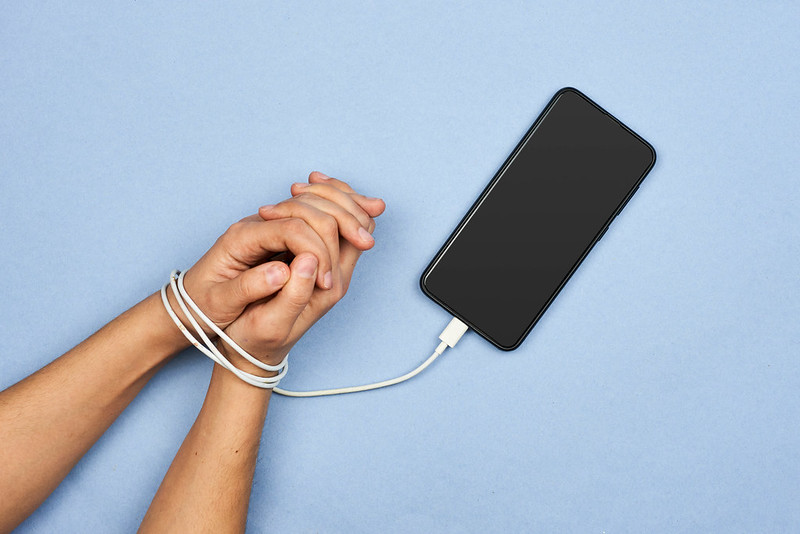
When discussing digital detoxes, Stacey has many suggestions, putting a time limit, making sure to log off. She also advocates spending time in nature to reset, “sitting with a tree, listening to a stream, going for a walk, and cooking without using technology are some ways to keep more balance.”, and if you find yourself suffering from FOMO while abstaining from technology, “Doing something fun and especially laughing is useful for taking your mind off of what you might be missing.”
From the individuals spoken to for this article, which range from purely curious to professional, each viewpoint offers its own unique approach, but there is also a common theme that arises from this analysis, that starting with self-awareness we can build self-control. In observing a variety of approaches, we can also determine that the right solution for an individual may not always be clear, there are many ways to approach balancing our digital lives.
We can start broad, looking to research examining a broad range of users to get to the root problem, to professionals helping groups of similar individuals, or we can take advice from individuals if they have found success. The key to promoting a healthier balance in your own media use is to practice self-awareness as you try any approach, the solution that works for you will feel right.
Now imagine you are in a meditation session with a digital detox coach. Your eyes are closed, and you can feel the morning sun cast its gentle warmth across the tranquil park, you allow yourself to sink into a state of deep relaxation. Sitting beneath the shade of a towering oak tree, you focus on the gentle rustle of leaves and the soothing sound of wind whispering through the branches. With each inhale, you observe yourself, each sound and feeling, filling you with a sense of calm and contentment. As you lose yourself in the moment, the peaceful tranquility is interrupted by the blaring of a car horn in the distance. For a brief moment, your mind jolts back to reality, but instead of instinctively reaching for your phone to check for notifications you realize the source of the noise, its impermanence, and a sense of relief washes over you.

Distractions will always exist in the world, whether they come from technology or the bustling streets outside. With a deep breath, you let go of the fleeting distraction and return to meditation. This simple practice serves as a powerful reminder that digital detoxes are not just about unplugging from devices; they are about cultivating intention and presence in every aspect of life. Instead of allowing our attention to be held captive, we can learn to respond responsibly or choose not to engage with them in that moment, taking back the power of choice.
Sources:
- Curtin, S. C., & Garnett, M. F. (2023). Suicide and Homicide Death Rates Among Youth and Young Adults Aged 10–24: United States, 2001–2021. https://www.cdc.gov/nchs/products/databriefs/db471.htm
- Kahya Özyirmidokuz, E., & STOICA, E. A. (2023). Deciphering User Feedback: Clustering of Digital Well-Being System Reviews. Management of Sustainable Development, 15(2), 7–12. https://doi.org/10.54989/msd-2023-0011
- Kim, J. (2024). The value of a shared experience: Relationships between co-experience and identification with other audiences and audience engagement behaviors on social media. Computers in Human Behavior, 152. https://doi.org/10.1016/j.chb.2023.108050
- Law, E. C., Han, M. X., Lai, Z., Lim, S., Ong, Z. Y., Ng, V., Gabard-Durnam, L. J., Wilkinson, C. L., Levin, A. R., Rifkin-Graboi, A., Daniel, L. M., Gluckman, P. D., Chong, Y. S., Meaney, M. J., & Nelson, C. A. (2023). Associations Between Infant Screen Use, Electroencephalography Markers, and Cognitive Outcomes. JAMA Pediatrics, 177(3), 311–318. https://doi.org/10.1001/jamapediatrics.2022.5674
- The State of Distracted Driving in 2023 & the Future of Road Safety. (2023). https://www.cmtelematics.com/distracted-driving-report-2023/
- Vogels, E. A. (2022). Teens and Cyberbullying 2022. https://www.pewresearch.org/internet/2022/12/15/teens-and-cyberbullying-2022/

 Brandon Carter | Portfolio of Work
Leave a comment